
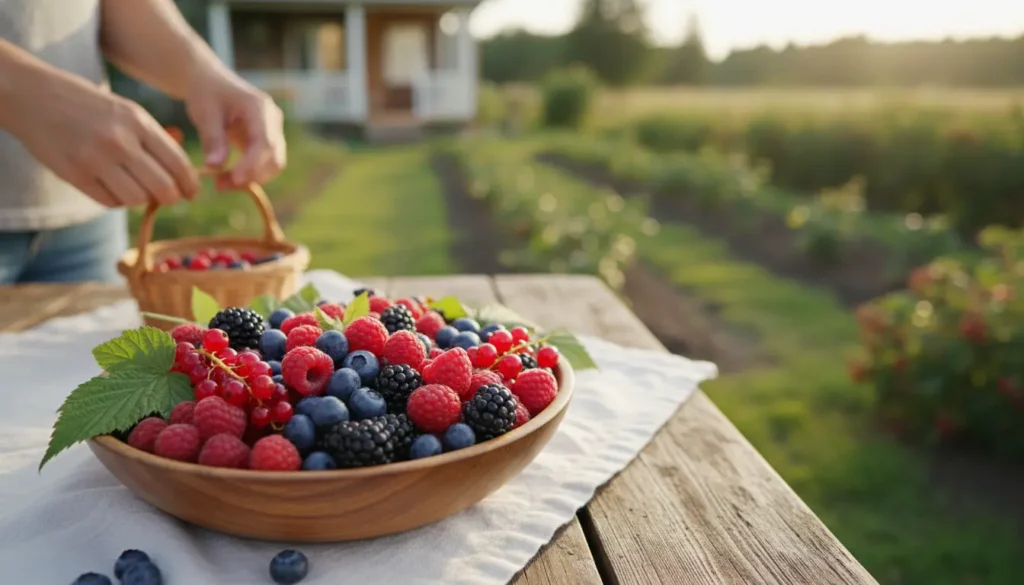
Growing berries at home can give you steady, fresh fruit throughout the year if you choose the right plants and use season-extending techniques. This guide explains practical steps to plan, plant, protect, and harvest so you get more pickings from a small patch.
How to Harvest Fresh Berries Year-Round from Home Patches
Year-round harvesting is about planning more than continuous picking from one plant. Combine plant selection, staggered planting, and climate protection to smooth out production and add off-season harvests.
Choose the Right Varieties for Year-Round Harvest
Select varieties with different fruiting times and those bred for extended seasons. Include everbearing or day-neutral strawberries, summer and fall-bearing raspberries, and remontant blackberries where available.
- Strawberries: day-neutral or everbearing varieties for multiple flushes.
- Raspberries: plant both summer-bearing and fall-bearing types.
- Blackberries: choose thornless remontant types for longer harvest windows.
- Caneberries in containers: moveable to extend season using microclimates.
Prepare Soil and Site for Consistent Yields
Healthy soil produces more fruit and reduces stress that shortens harvests. Aim for well-drained, fertile soil with 2–4% organic matter and a pH suitable for your species.
Plant where berries get at least 6 hours of sun, and allow air circulation to prevent disease. Raised beds or containers can help manage soil and microclimate.
Stagger Planting to Extend Harvest
Stagger planting times and mix early, mid, and late season varieties to create overlapping fruiting windows. For strawberries, sow transplants at intervals to produce fresh plants for different months.
Use this simple schedule example:
- Spring: plant early strawberries and summer raspberries.
- Late spring: set out day-neutral strawberries.
- Summer: transplant fall-bearing raspberry canes started earlier.
- Fall: protect late-season plants to carry into winter and early spring harvests.
Extend the Season with Microclimates and Structures
Create microclimates by using south-facing walls, cold frames, cloches, and high tunnels. These structures raise temperatures by several degrees and protect buds from frost.
Portable protection like row covers or hoop tunnels is inexpensive and easy to deploy for early spring and late fall harvests. Use shade cloth during hot spells to reduce heat stress.
Watering and Fertility for Continuous Fruit
Consistent moisture supports flowering and fruit set. Drip irrigation or soaker hoses deliver steady moisture without wetting foliage.
Feed plants with balanced fertilizers timed to growth stages: light feed in early spring, bloom fertilizer at flowering, and reduced nitrogen late season to prepare canes for dormancy.
Harvesting Techniques for Better Yield
Harvest regularly to encourage more fruiting. Pick ripe berries every 2–3 days during peak season and handle gently to avoid bruising.
Use shallow containers to prevent crushing berries and cool fruit quickly after harvest to prolong shelf life. For small-scale preservation, freeze on trays then transfer to bags to retain quality.
Protect from Pests, Birds, and Disease
Bird netting and floating row covers protect ripe fruit without chemicals. Monitor for common pests like aphids and spider mites and use integrated pest management (IPM) strategies.
Sanitation reduces disease pressure—remove old canes, prune for airflow, and rotate beds when possible to break pathogen cycles.
Day-neutral strawberries can fruit for up to 4 months in suitable climates, making them a high-value choice for extending fresh harvests.
Small Case Study: Suburban Patch Success
Maria, a homeowner in Oregon, created a 40-square-foot mixed berry patch. She planted everbearing strawberries, a mix of summer and fall raspberries, and a remontant blackberry.
By using raised beds, a cold frame for early spring, and staggered planting, Maria harvested fresh berries from May through November. She freezes excess fruit and notes her yield increased after adding drip irrigation and a light summer shade screen.
Seasonal Checklist for Year-Round Home Patches
- Winter: plan varieties, prune as needed, add mulch for protection.
- Spring: plant transplants, set up cold frames, begin irrigation.
- Summer: monitor pests, use shade, harvest frequently.
- Fall: plant fall-bearing types, protect late fruit with covers.
Examples of Simple Tools and Supplies
- Bird netting and floating row covers
- Cold frame or inexpensive hoop tunnels
- Drip irrigation kit and timers
- Raised bed materials and quality compost
Harvesting fresh berries year-round from home patches is achievable with planning and simple protections. Focus on variety mix, staggered planting, soil health, and season extension methods to smooth production through more months.
Start small, track what works in your climate, and gradually increase beds or containers. With these practical steps, you can enjoy fresh berries far beyond the traditional summer window.