
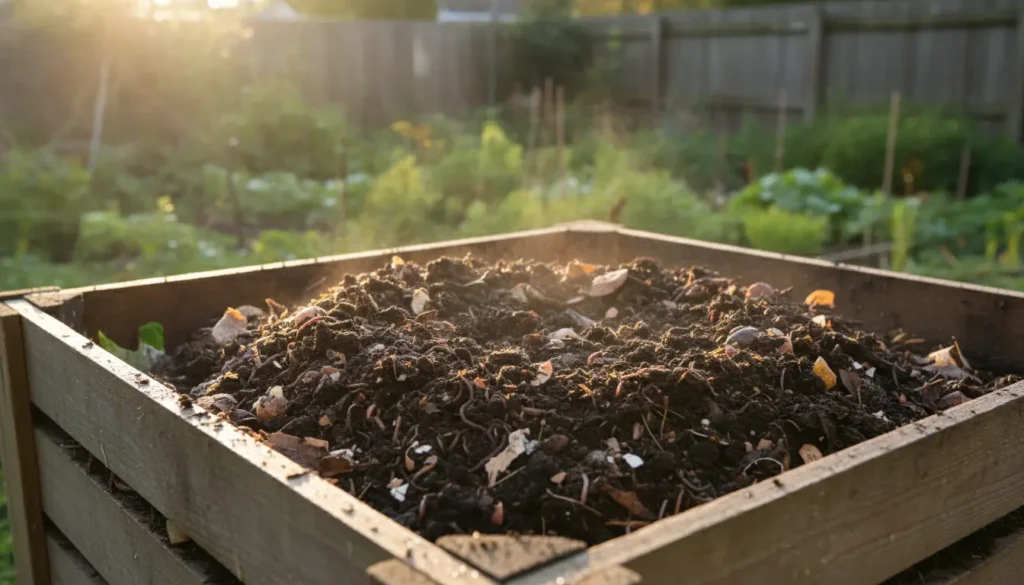
Composting turns kitchen scraps and yard waste into a useful soil amendment. For beginners, the process seems complex, but it follows a few consistent principles. This guide explains simple steps you can follow at home.
Home Composting for Beginners: Getting Started
Decide where you will compost. Options include a backyard pile, a sealed bin, or a small indoor system for food scraps. Choose a location with good drainage and some shade to keep moisture and temperature steady.
Pick the right container. Common choices are tumblers, plastic bins with aeration holes, or a simple open pile. For small spaces, a worm (vermicompost) bin works well and produces rich castings.
Basic Materials: Greens and Browns
Compost depends on a balance between nitrogen-rich “greens” and carbon-rich “browns.” Greens provide protein for microbes; browns provide energy and structure. Aim for a rough ratio of 1 part greens to 2–3 parts browns by volume.
- Greens: vegetable peels, fruit scraps, coffee grounds, grass clippings.
- Browns: dry leaves, shredded paper, cardboard, straw.
Too many greens make the pile wet and smelly. Too many browns slow decomposition. Adjust the mix and add water or dry material until the texture resembles a damp sponge.
How to Build and Maintain a Compost Pile
Layering speeds composting but is not required. Start with coarse browns like twigs for airflow, then alternate greens and browns. Chop larger items to increase surface area and accelerate breakdown.
- Add a 4–6 inch base of browns for drainage and aeration.
- Add a 2–4 inch layer of greens, then a layer of browns.
- Repeat until the bin is full. Keep the pile moist but not saturated.
Turn or aerate the pile every 1–2 weeks to introduce oxygen. Turning helps heat the pile and reduces odors. If using a tumbler, rotate it according to the manufacturer instructions.
Temperature and Timing
Active composting heats the pile to 120–160°F (50–70°C) when microbial activity is high. Higher temperatures kill weed seeds and pathogens. Small or cold piles may not heat much but will still decompose slowly.
Typical timelines:
- Hot composting: 2–3 months with regular turning.
- Cold composting: 6–12 months with minimal turning.
- Vermicompost: 2–4 months for finished castings depending on conditions.
What Not to Compost
Avoid adding meat, dairy, bones, diseased plants, and pet waste to a typical home compost. These items attract pests and can create odors. If you want to compost them, consider a hot, managed system designed to reach high temperatures.
Also limit oily foods and large amounts of citrus if your compost system is small. These can slow microbial activity or discourage worms in vermicomposting systems.
Common Problems and Solutions
- Bad smell: Add more browns, aerate the pile, and check moisture. Too wet or too many greens cause odors.
- Slow decomposition: Increase surface area by chopping materials, add nitrogen (greens), and ensure warmth.
- Pests: Use a closed bin, bury food scraps, or use a tumbling composter to reduce access.
Using Finished Compost
Finished compost is dark, crumbly, and smells earthy. Use it as a soil amendment mixed into garden beds or as a top dressing for lawns and potted plants. Typical uses include mixing 1–3 inches into new planting beds or adding 10–20% compost to potting mixes.
Compost improves water retention, nutrient availability, and soil structure. It also supports beneficial soil organisms that help plants resist stress and disease.
Small Real-World Case Study
Case Study: A Two-Person Urban Household
Anna and Miguel used a 50-liter tumbler for 12 months in a small courtyard. They collected kitchen scraps and mixed them with shredded cardboard and fallen leaves. By turning the tumbler weekly and maintaining a damp sponge texture, they produced about 30 liters of finished compost in 6 months.
They applied the compost to container tomatoes and herbs, noting fuller foliage and fewer watering needs. The system eliminated most curbside food waste and reduced their trash to one small bag every two weeks.
Quick Checklist for Home Composting Beginners
- Choose a bin type: tumbler, open pile, or worm bin.
- Collect greens and browns separately for balance.
- Keep moisture like a wrung-out sponge.
- Turn regularly for faster results.
- Use finished compost to enrich soil and containers.
Home composting is low-cost and reduces household waste while building healthier soil. Start small, observe your pile weekly, and tweak layers and moisture until it behaves predictably. Over time you will refine the process to match your climate and available materials.